In brief
For Thai consulting, installation and licensing arrangements, assess the Saudi activity, the payment category and any applicable treaty entitlement.
Thai businesses selling services or goods into Saudi Arabia should assess Saudi domestic tax rules when their activities fall outside the limited air transport agreement. Thailand’s Revenue Department lists the Saudi instrument as an air transport agreement. Its enterprise and income definitions give no general business-profits protection to a Thai contractor or consultant.
Review the Saudi activity
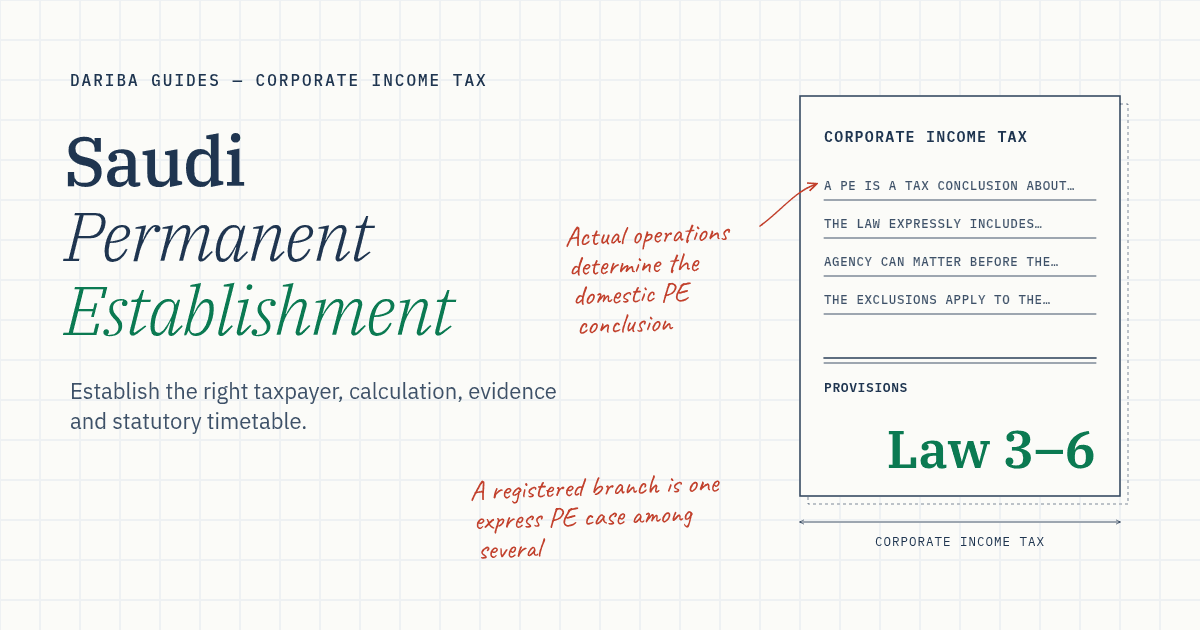
Under Article 4 of the Saudi Income Tax Law, consider whether the non-resident carries on business wholly or partly through a fixed place or an agent. The law expressly includes construction sites and assembly facilities, and it sets conditions for specific exclusions such as certain storage, display and information-gathering activities. Read those conditions against the work actually performed. A warehouse used to deliver goods can present different facts from a facility used by the same supplier for installation or customer services.
For a project team, keep a schedule of premises and site access, days and duties in Saudi Arabia, subcontractor activity, and what the Saudi representative can negotiate or agree. Use the domestic permanent establishment guide to assess fixed place and agency separately. The 183-day test in the aviation agreement concerns certain airline employees’ remuneration.
Review each payment and its connection to a Saudi establishment
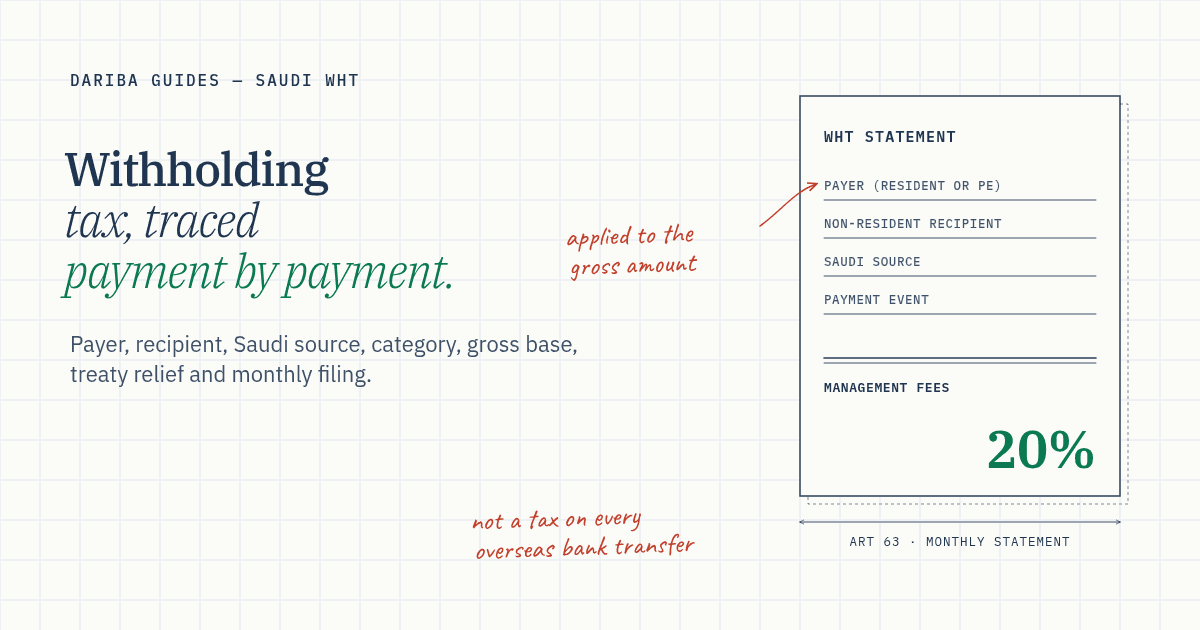
Article 5 sets the Saudi income-source rules. Article 68 addresses withholding by a Saudi resident or a Saudi permanent establishment paying a non-resident income from a Saudi source. Start with what the contract provides and who earns the consideration. Classify equipment, installation, support and licence rights separately where the contracts and performance support that treatment.
Illustrative example. A Thai equipment supplier signs a contract that includes commissioning at a Saudi factory. Review whether the site arrangements create a Saudi permanent establishment and whether the commissioning receipts relate to it. If the customer also pays a separate fee for rights to use the supplier’s software, analyse the rights granted, the recipient and the fee’s connection to any Saudi establishment. A freight agreement applying to a named carrier offers no basis to exempt either fee.
Document the source, classification and permanent establishment analysis before the first payment. If Saudi tax has already been withheld on income included in a Saudi tax base, review the Article 68 credit mechanics against the actual payer and recipient records.
Dariba is independent of ZATCA. This guide is for general information. Seek qualified Saudi tax advice for a specific transaction.
Sources
- Saudi–Thailand Agreement for the Reciprocal Exemption of Taxes on the Activities of Air Transport Enterprises of the Two CountriesSigned agreement, Articles 1–8, accompanying memorandum, Thai ratification instrument and bilateral exchange record.
- Thailand Revenue Department, Double Tax AgreementsSaudi Arabia entry, checked 15 November 2026.
- Saudi Income Tax Law, Royal Decree No. M/1, as amendedArticles 4–6, 35 and 68.