In brief
The Saudi–Latvia Convention uses 183-day project and service tests, has a separate offshore rule and conditions export protection on the agency analysis.
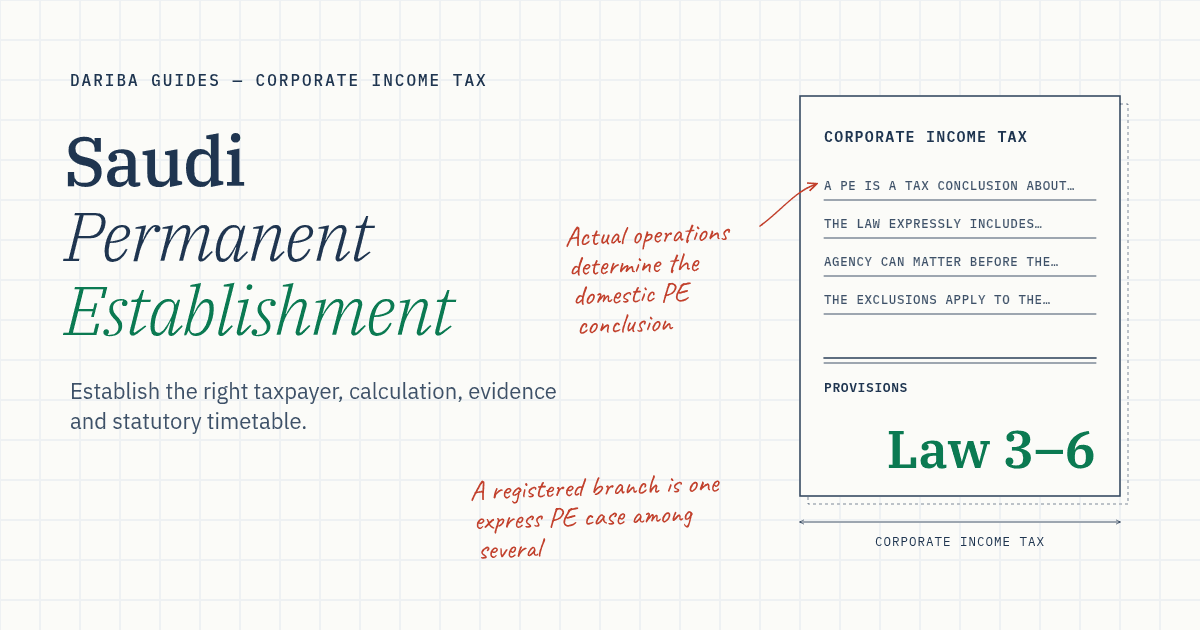
A Latvian business selling equipment or undertaking offshore work in Saudi Arabia can encounter several forms of permanent establishment (PE) under the Saudi–Latvia Double Taxation Convention. The tax file should identify the particular route before allocating any profit.
Test projects, local people and offshore activity
Article 5(3)(a) covers a specified construction, assembly, installation or supervision activity that continues for more than 183 days. Article 5(3)(b) covers the same or connected services through personnel for more than 183 days in aggregate within any 12-month period. Keep separate records for the site duration and qualifying services.
Article 5(5)(a) covers a person who habitually concludes qualifying contracts or habitually plays the principal role leading to contracts routinely concluded without material modification. Paragraph 5(b) separately covers habitual stockholding and regular delivery combined with local activity that contributes to sales. Preserve contract approval, negotiation and delivery records and check the specific activity and independent-agent conditions.
Protocol paragraph 3 separately deems a PE to exist for offshore activities within its definition. The definition concerns activity in areas adjacent to territorial waters involving exploration or exploitation of the seabed, subsoil and their natural resources. Review that provision directly when such work is involved.
Check the agency exception to export protection
Article 7 limits source-state business-profit taxation to attributable profits. Protocol paragraph 5(a) protects covered merchandise export profit unless Article 5(5) applies. It also permits source taxation of profit from other export-contract activities carried out through a local PE. For a Latvian supplier whose Saudi representative regularly advances sales from local stock, identify whether the representative meets Article 5(5), then analyse export and onshore profit separately. Once the PE is identified, use the actual functions, expenses and contract rights to attribute profit.
Protocol paragraph 6 separately sets a 5% maximum on the remaining profits after Article 7 tax, where a domestic charge applies.
Sources
- Saudi–Latvia Convention for the Avoidance of Double Taxation with Respect to Taxes on Income and on Capital and the Prevention of Tax Evasion and its ProtocolArticles 5 and 7, and Protocol paragraphs 3, 5 and 6.