In brief
The Saudi–Morocco treaty permits source taxation of certain same-or-similar local sales and activities after a PE is established. Its Protocol protects covered goods exports.
A Moroccan enterprise may sell equipment into Saudi Arabia through a local branch and make additional sales directly from its head office. The Saudi–Morocco Double Taxation Agreement asks where those sales and activities occur and whether they resemble what the branch does. The Protocol separately addresses merchandise export profits.
Establish the source-state presence
Article 5(3)(a) covers specified construction, assembly, installation and related supervision lasting more than six months. Article 5(3)(b) covers services, including consultancy, through personnel on the same or a connected project for periods exceeding six months in aggregate within any 12 months. Review fixed premises and the authority and stock-delivery activities of local agents under Article 5(1)–(2) and (5). Article 5(6) separately deems an insurance enterprise to have a PE where it collects premiums or insures local risks in the other state.
Trace the three profit routes
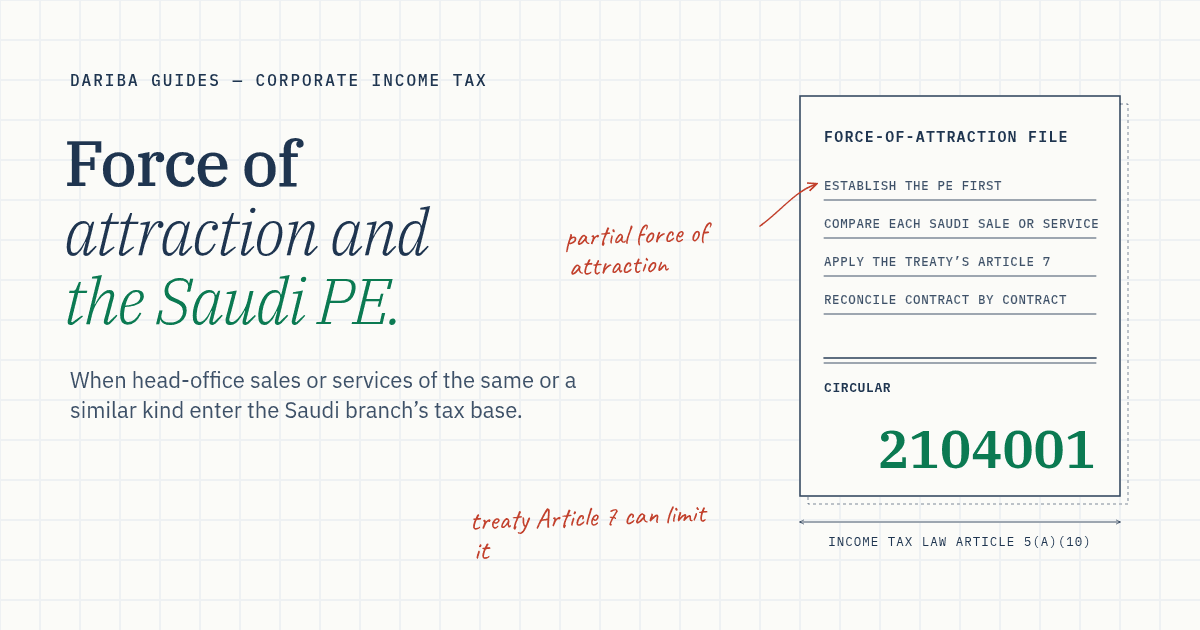
Once a PE exists, Article 7(1) allows Saudi Arabia to tax profits attributable to the PE, profits from Saudi sales of goods of the same or a similar kind and profits from Saudi business activity of the same or a similar kind. The second and third routes require a factual comparison. Contracts, product specifications and records of the local sales activity can establish the nature and location of what was sold. Review the PE expense and internal charge rules in Article 7(3).
The Protocol protects profits from qualifying merchandise exports into the other state. It also says income from other activities under the export contract carried out in the importing state may be taxed there. Read that part alongside Articles 5 and 7 and any specific income article. For an equipment contract, classify the export, Saudi installation and related local services before attributing profit. The label “direct sale” or the location from which an invoice is issued cannot settle the result.
Finally, Article 10(6) addresses after-tax PE profits on remittance. Reconcile the actual amount transferred with the Saudi PE’s after-tax profit and assess domestic tax under the treaty’s 5% limit. For the treatment of technical fees and other payment categories, see the Morocco withholding guide.
Sources
- Saudi–Morocco Agreement for the Avoidance of Double Taxation and the Prevention of Tax Evasion with Respect to Taxes on Income and its ProtocolArticles 5, 7 and 10(6), and the Protocol provisions on business profits and merchandise exports.
- OECD, Signatories and Parties to the BEPS Multilateral InstrumentStatus dated 12 November 2026, Morocco entry.