In brief
The Saudi–Russia Convention has two six-month PE tests. The MLI changes agency, activity exemptions and specified contract-splitting rules.
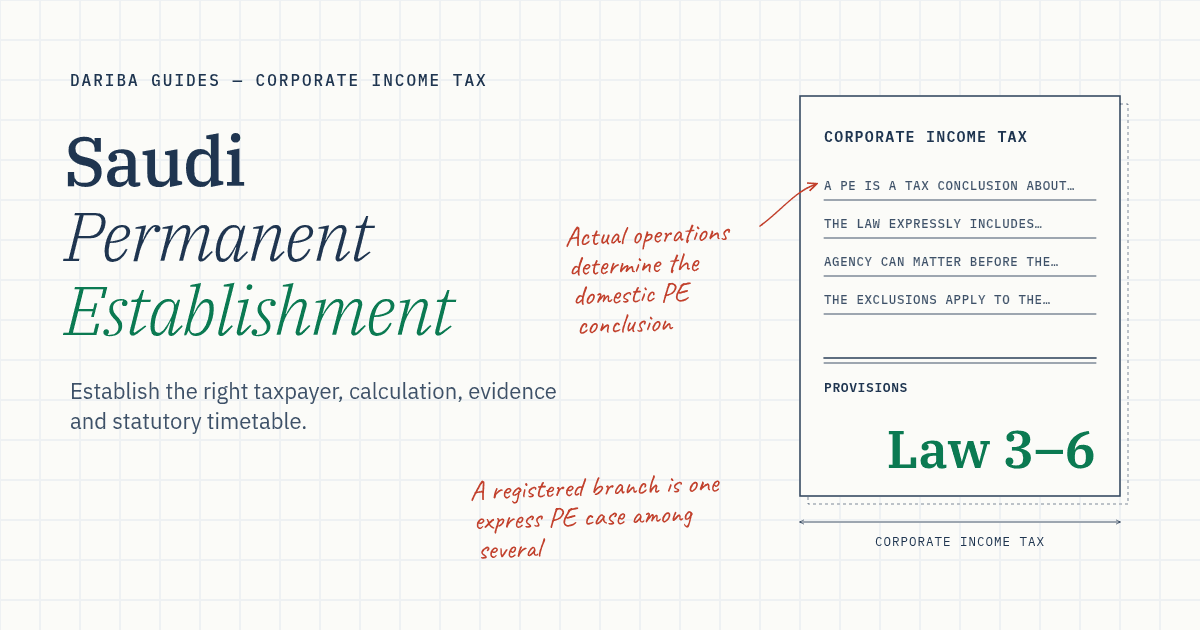
A Russian enterprise delivering a project in Saudi Arabia should assess both its project presence and how local personnel secure contracts. Article 5 of the Saudi–Russia Double Taxation Convention supplies the original permanent establishment (PE) tests. The Multilateral Instrument (MLI) adds rules that can change the result.
Build the site and service timelines
Article 5(3)(a) covers a construction site, assembly or installation project, or connected supervision lasting more than six months. Article 5(3)(b) covers services through personnel on the same or a connected project for periods aggregating more than six months in any 12 months. Compare the work orders, site access dates and personnel records with the actual activities.
The matched MLI Article 14 rule can add qualifying periods of connected activity on the same project by closely related enterprises. Its conditions include separate periods exceeding 30 days and the specified cumulative test for the first enterprise. This rule addresses the treaty’s specified project-duration provisions. Check it separately from the Article 5(3)(b) service timeline. Russia’s Article 14 reservation for specified natural-resource provisions should be checked where relevant.
Review local contracting and activity exemptions
Both states notified treaty Articles 5(5) and 5(6) under MLI Article 12. A dependent person who habitually concludes covered contracts or plays the principal role leading to contracts routinely concluded without material modification can create a PE where the other conditions are met. Check what the local team does before signature and whether the independent-agent exception applies. Both states selected Option A under MLI Article 13 and notified Article 5(4). Check the preparatory or auxiliary character of the relevant activities and consider the anti-fragmentation rule where complementary functions form part of a cohesive business operation.
For Saudi taxes other than withholding, the ordinary MLI Article 35(1)(b) rule, read with Russia’s Article 35(7) notification, applies to taxable periods beginning on or after 26 June 2021. For a calendar-year taxpayer, the first such period starts on 1 January 2022.
Attribute profit and review the export contract
Article 7 limits Saudi business-profit taxation to amounts attributable to the PE. The Protocol’s Article 7 provision protects covered merchandise export profit and also addresses other activities under the export contract carried out in Saudi Arabia. Separate the export price, Saudi installation and other Saudi duties in the project records. Read the export provision alongside the PE test and any specific income article before deciding the Saudi treatment. The Protocol separately preserves domestic laws on non-resident insurance profits, with a consultation provision for material changes.
Sources
- Saudi–Russia Convention for the Avoidance of Double Taxation and the Prevention of Tax Evasion with Respect to Taxes on Income and on Capital and its ProtocolArticles 5 and 7 and Protocol provision on Article 7.
- Saudi Arabia’s Deposited BEPS MLI Reservations and NotificationsSaudi notifications and reservations on applicable MLI provisions.
- Russian Federation’s Deposited BEPS MLI Reservations and NotificationsRussian notifications and reservations, including Article 35(7).
- Russian Federation’s Notification of Completion of Internal Procedures under BEPS MLI Article 35(7)Saudi Arabia entry dated 26 November 2020.
- OECD, Multilateral Convention to Implement Tax Treaty Related Measures to Prevent BEPSArticles 12–14 and 35.