In brief
The agreement has separate six-month tests for specified projects and services. Article 7(4) distinguishes merchandise export profit from local activity conducted through a permanent establishment.
A Vietnamese company that supplies machinery and sends staff to install it in Saudi Arabia should review Article 5 of the Saudi–Vietnam Double Taxation Agreement. The duration and character of the local activities help determine whether the company has a permanent establishment (PE). The export contract can then raise a separate profit attribution question.
Apply the correct time test
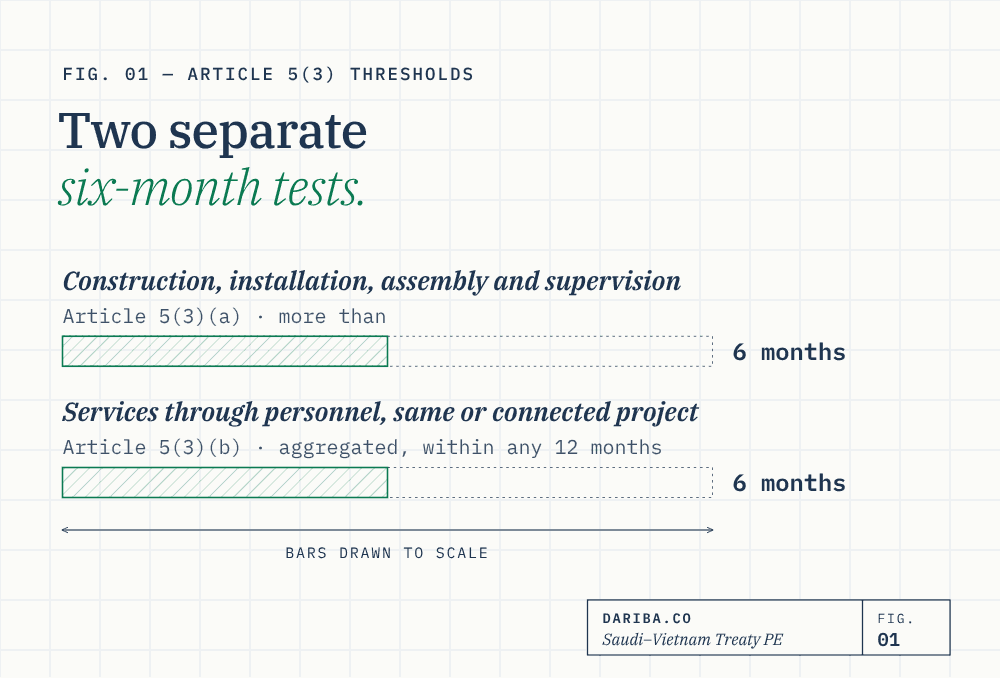
Article 5(3)(a) covers specified construction, installation, assembly and related supervision lasting more than six months. Article 5(3)(b) addresses services through personnel on the same or a connected project for periods aggregating more than six months within any 12 months. Retain a chronology of the actual work and explain how the work orders are connected. Vietnam reserved against MLI Article 14 on contract splitting. Review fixed premises and agency separately, including applicable matched MLI provisions.
Distinguish merchandise exports from work through the PE
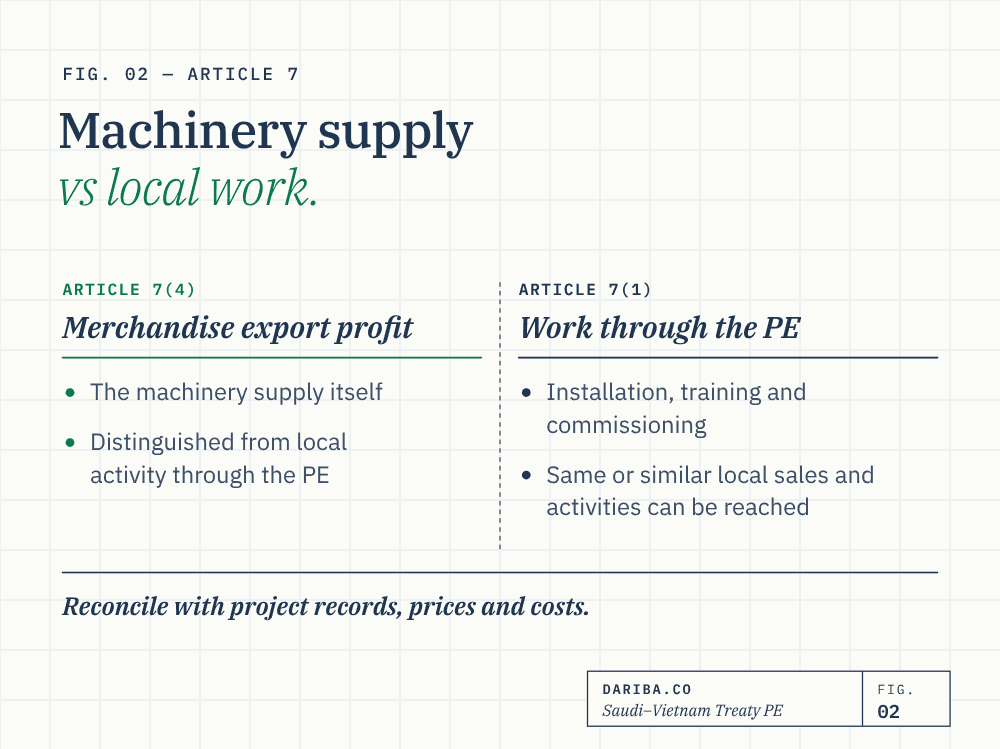
Article 7(1) allows the source state to tax profits attributable to the PE and profits from sales in that state of goods of the same or a similar kind and from similar business activities carried on there. ZATCA’s Circular 2104001, Force of Attraction Rule in the Context of Permanent Establishment, explains the similarity test. Article 7(4) specifically excludes the covered merchandise export profit from taxation in the importing state. Other activities under the export contract carried out through a Saudi PE can generate taxable profits in Saudi Arabia.
Use project records, prices and costs to reconcile the machinery supply with local installation, training and commissioning. Apply the separate-enterprise rule and Article 7(3) to any internal expense or charge.
Article 7(5) includes services within business profits and refers independent personal services to Article 14. Article 12 separately addresses specified technical or managerial services and assistance, including its effective-connection clause. Use the withholding guide to check the payment category before applying the project’s PE conclusion to a particular invoice.
Sources
- Saudi–Vietnam Agreement for the Avoidance of Double Taxation and the Prevention of Tax Evasion with Respect to Taxes on IncomeArticles 5, 7, 12 and 14.
- Vietnam’s Deposited MLI Reservations and NotificationsRead with Saudi Arabia’s deposited position and applicable notices.
- ZATCA Circular 2104001, Force of Attraction Rule in the Context of Permanent EstablishmentPartial force of attraction and the similarity test.