In brief
The treaty has separate six-month project and service rules. The Protocol distinguishes merchandise export profit from other activity carried out by a local establishment.
A Greek supplier selling machinery and supervising installation in Saudi Arabia should test whether its Saudi activity creates a permanent establishment (PE). Article 5 of the Saudi–Greece Double Taxation Convention sets the tests. Article 7 and the Protocol govern how to attribute profit once an establishment exists.
Measure each local activity under the treaty
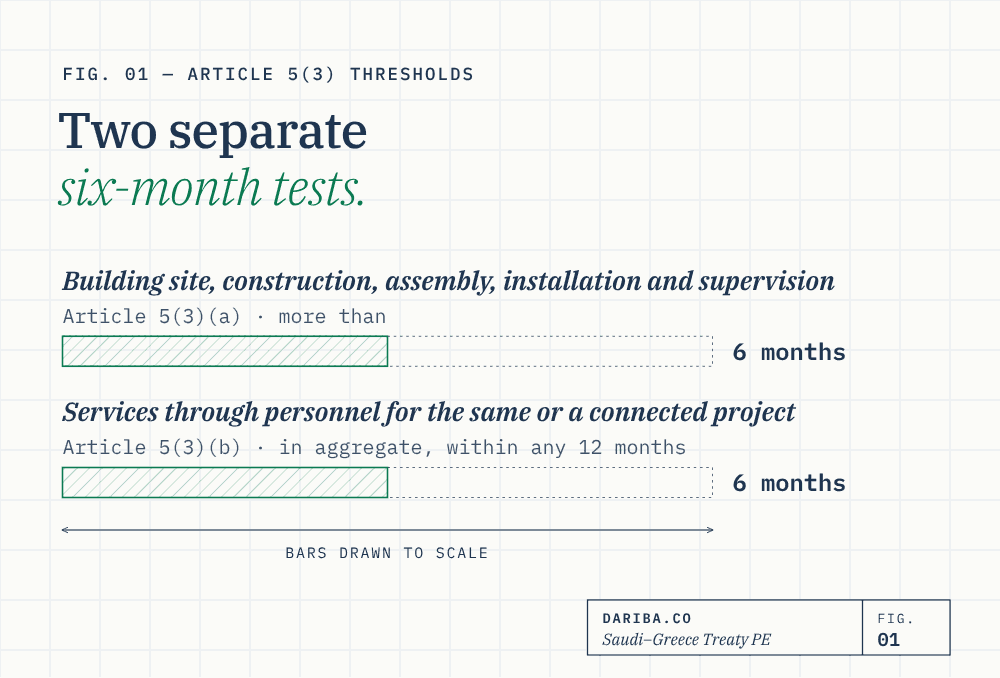
Article 5(3)(a) covers a building site, construction, assembly, installation and related supervision where the specified activity continues for more than six months. Article 5(3)(b) covers services, including consultancy through personnel, for the same or a connected project where the activities aggregate more than six months within any 12 months. Keep the original and revised work orders, site dates and service records. For a separate office, stock arrangement or representative, review the fixed-place and agency tests and any matched MLI modifications before relying on an exemption.
Attribute profit to the Saudi functions
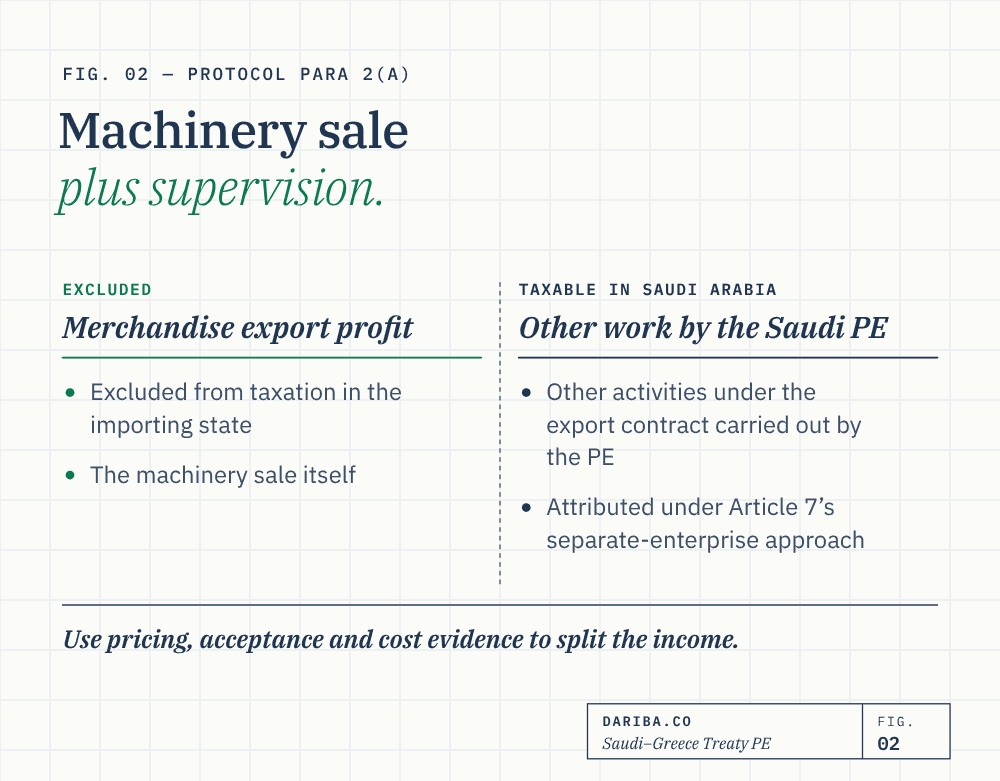
Protocol paragraph 2(a) excludes the stated merchandise export profit from taxation in the importing state. Where an export contract includes other activities carried out by a Saudi PE, Saudi Arabia may tax income derived by the PE from that work. Article 7 applies its separate-enterprise approach to the attribution. Use the pricing, acceptance and cost evidence to determine which income comes from the merchandise sale and which comes from the Saudi activity.
Protocol paragraph 2(b) includes enterprise services and rental of tangible movable property in its description of business profits, subject to its terms. Apply the separate royalty article where equipment-use payments fall under it. Paragraph 2(c) addresses the application of domestic law to insurance activities. For an individual acting independently, review Article 14 separately.
Sources
- Saudi–Greece Convention for the Avoidance of Double Taxation and the Prevention of Tax Evasion with Respect to Taxes on Income and on Capital, with ProtocolArticles 5, 7 and 14 and Protocol paragraph 2.
- Saudi Arabia’s Deposited MLI Reservations and NotificationsListed agreement 12. Apply optional provisions only after checking both states’ positions and the period.