In brief
The agreement applies from 2026. It separates dividends, debt, royalties and technical service fees, and caps additional tax on specified branch profits.
A Saudi company paying a Kuwaiti consultant should review Article 13 of the Saudi–Kuwait Double Taxation Agreement even if the provider has no project office in Saudi Arabia. The agreement entered into force on 1 August 2025 and its withholding provisions apply to amounts paid from 1 January 2026.
| Payment | Treaty provision | Ordinary treaty treatment |
|---|---|---|
| Qualifying dividends | Article 10(2) | Source tax up to 5% of gross dividends |
| Qualifying debt-claim income | Article 11(1) | Taxable exclusively in the beneficial owner’s residence state |
| Qualifying royalties | Article 12(2) | Source tax up to 10% of gross royalties |
| Qualifying technical service fees | Article 13(2) | Source tax up to 10% of gross fees |
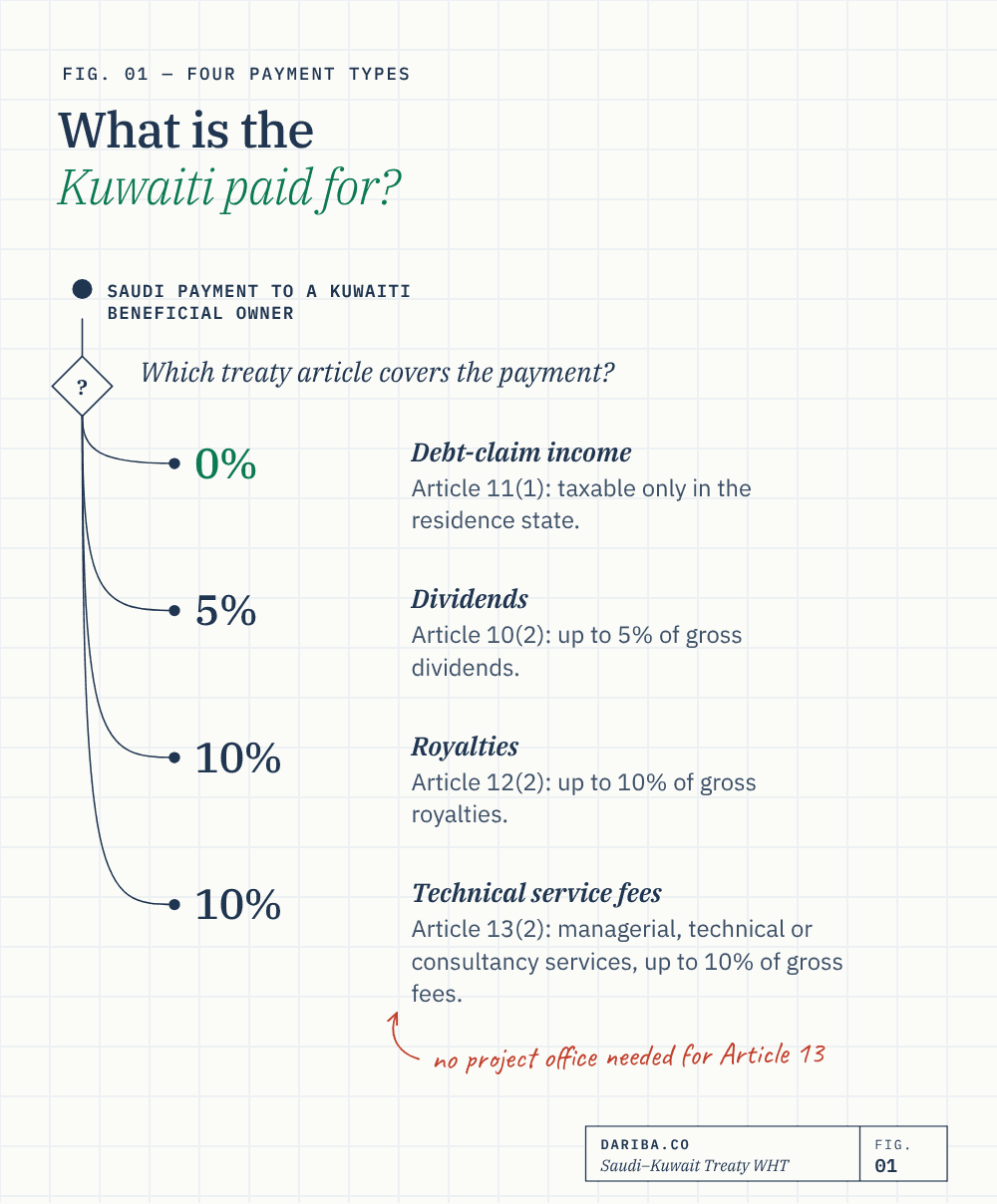
The treaty treatment depends on residence, beneficial ownership, the applicable domestic charge and Article 29’s principal purpose test. Article 4 uses specific criteria, including Kuwaiti nationality and a permanent home in Kuwait for an individual qualifying under the ordinary Kuwaiti rule.
Classify the fee and establish where it arises
Article 13 covers managerial, technical and consultancy services, with exclusions for specified employment, teaching and personal-use payments. Check payer residence and whether a permanent establishment or fixed base incurred and bears the obligation under Article 13(5)–(6). An effectively connected fee can fall under Article 7 or Article 15. Article 12(3) separately includes specified contingent proceeds from disposing of listed intellectual property rights or property.
Review the branch and government investment rules
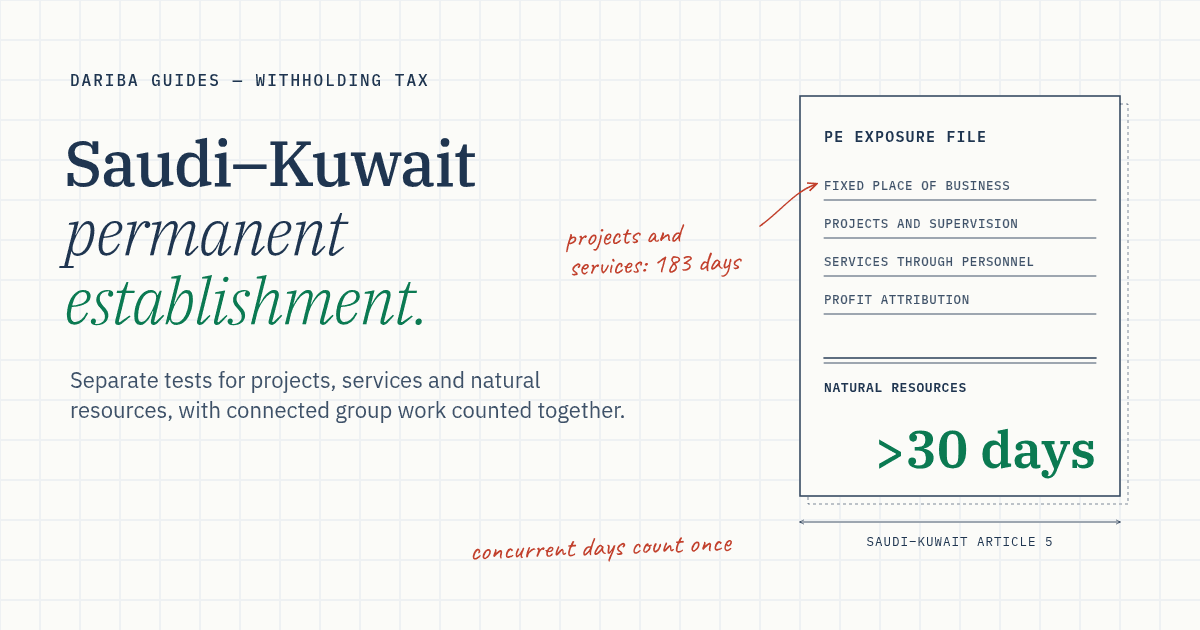
Article 10(6) limits the additional tax permitted under domestic law to 5% of the covered Article 7(1) profits. Use that provision’s stated profit base when reviewing the domestic charge. The permanent establishment guide covers those profits and the activity thresholds.
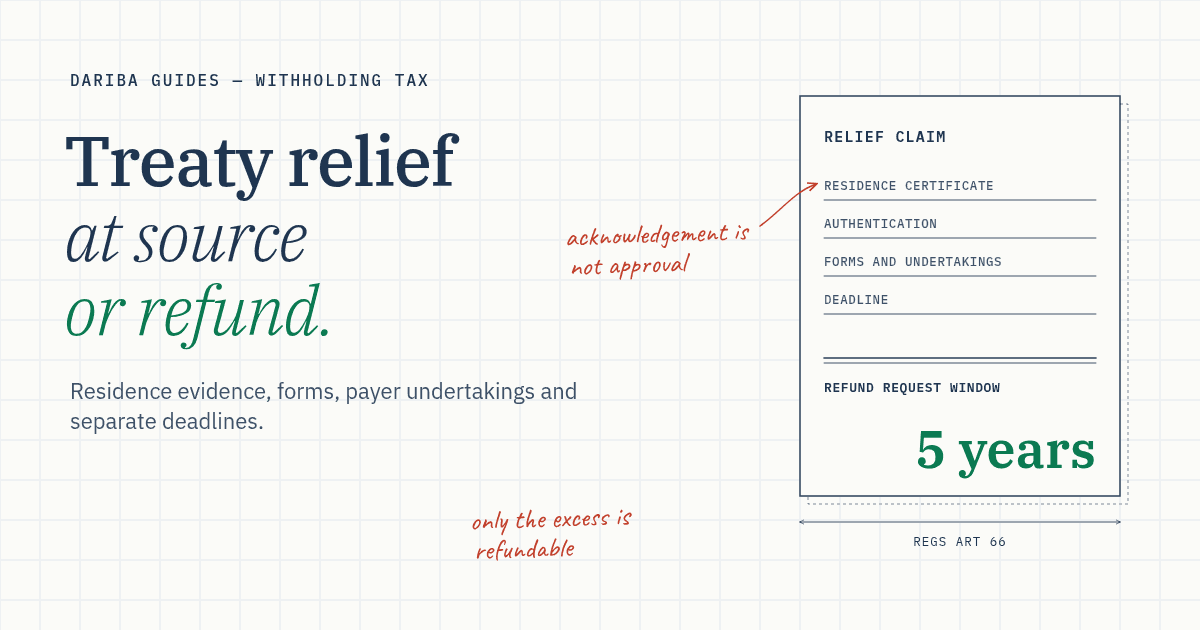
Article 23 reserves taxing rights over qualifying government investments, their income and gains to the investing state, with an exception for immovable-property income and gains. The competent authorities determine how to apply that provision by agreement. For ordinary relief at source or a refund, see section 4 of ZATCA’s Tax Circular on Implementation of Withholding Tax Under the Double Taxation Agreement.
Key takeaways
- Article 13 caps qualifying technical service fees at 10% of gross income.
- Article 11 generally assigns qualifying debt income exclusively to the beneficial owner’s residence state.
- Article 10(6) separately limits additional tax on covered branch profits.
Sources
- Saudi–Kuwait Agreement for the Avoidance of Double Taxation with Respect to Taxes on Income and the Prevention of Tax Evasion and AvoidanceArticles 4, 10–13, 23, 29 and 30.
- ZATCA Treaty Register, Kuwait ConventionEntry into force and application dates.
- ZATCA Tax Circular on Implementation of Withholding Tax Under the Double Taxation AgreementSection 4 on relief at source and refund claims.