In brief
The Saudi–Qatar agreement has separate construction, service and natural-resource thresholds. It also aggregates connected work by closely related enterprises and addresses complementary functions.
A Qatari enterprise working in Saudi Arabia should test Article 5 of the Saudi–Qatar Double Taxation Agreement against the actual work and local arrangements. The project, services and natural-resource tests use different time windows, and the treaty also addresses fixed places and agents.
| Activity | Treaty provision | Threshold |
|---|---|---|
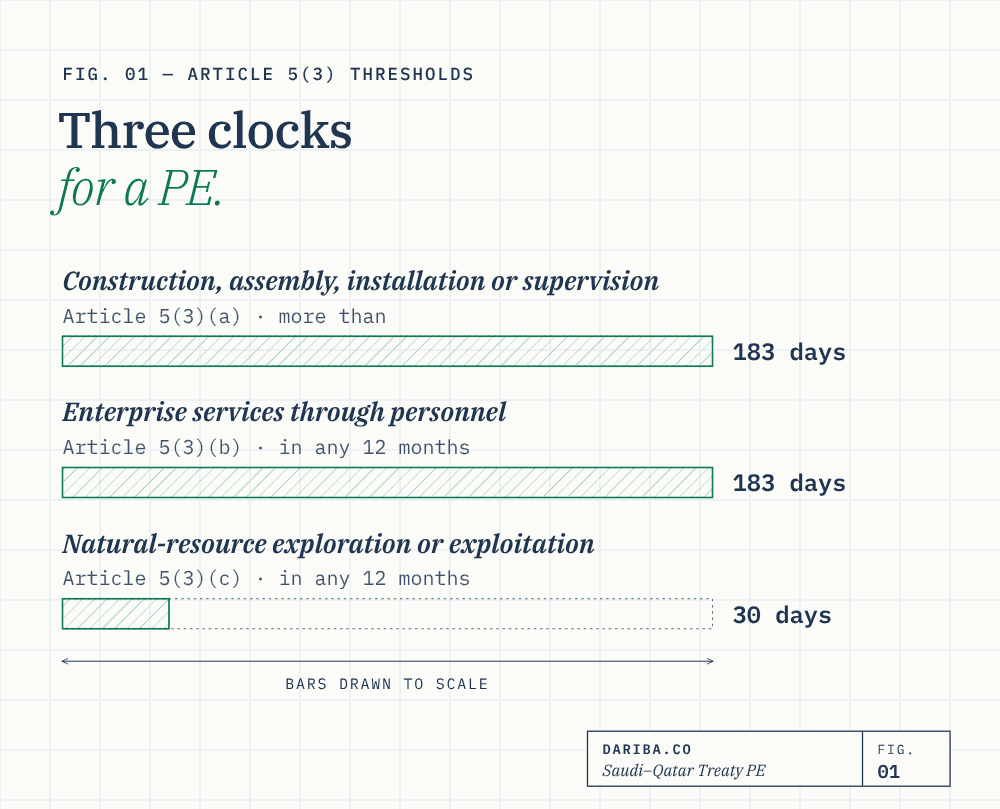
| Specified construction, assembly, installation or connected supervision | Article 5(3)(a) | More than 183 days |
| Enterprise services through personnel | Article 5(3)(b) | More than 183 days in any 12 months beginning or ending in the fiscal year concerned |
| Activities connected with exploration or exploitation of natural resources | Article 5(3)(c) | More than 30 days in any 12 months beginning or ending in the fiscal year concerned |
Count connected activities across closely related enterprises
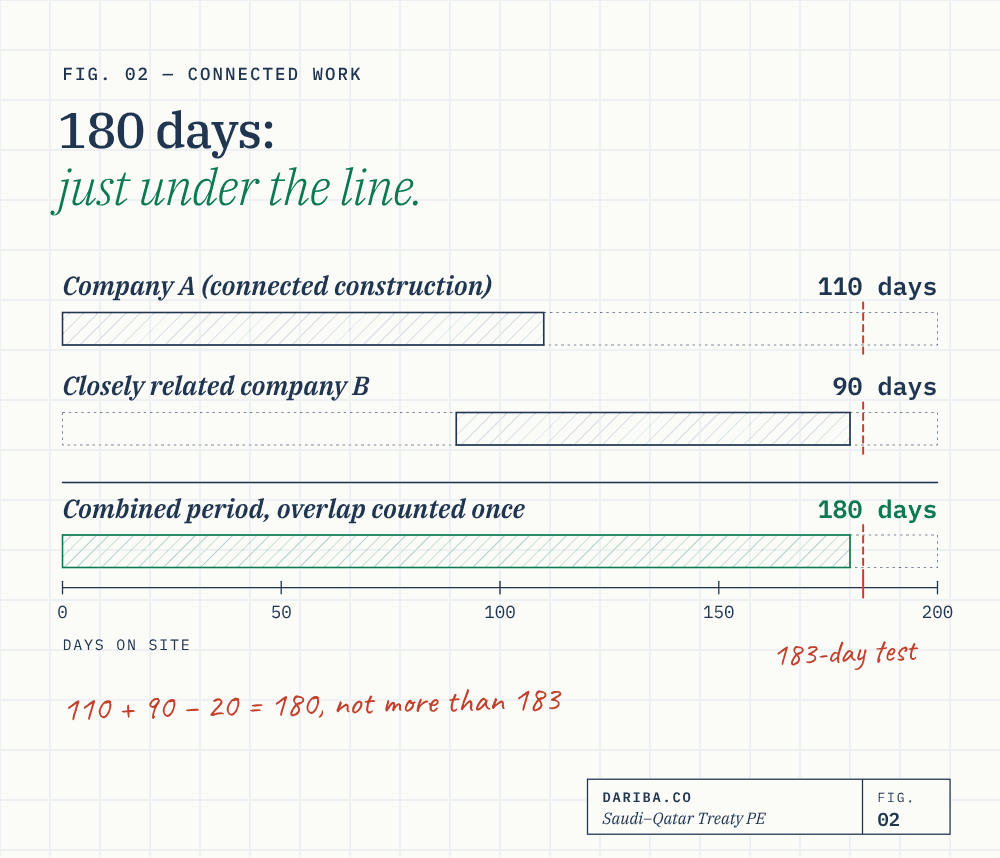
Article 5(3) aggregates periods of connected activity in the same state by closely related enterprises. It counts concurrent periods once. Dariba illustration. Two closely related companies carry out connected construction work for 110 and 90 days with a 20-day overlap. The combined period is 180 days if the stated periods count. Check the other PE routes even if the construction period falls below the threshold.
Examine the premises and the representative’s actual authority
Article 5(4) requires the listed activity or combined activities to be preparatory or auxiliary. Paragraph 5 can remove the exemption where activities at the same or another site are complementary functions in a cohesive operation and the stated conditions are met. Record how the Saudi sites support contracting, sales and fulfilment.
Article 5(6) reaches habitual conclusion of specified contracts and a habitual principal role leading to contracts routinely concluded without material modification. Read that provision with the independent-agent rule and the actual contracting and delivery arrangements.
Check what the permanent establishment changes
Article 7 addresses profit attributable to the permanent establishment. Retain the local functions, revenue allocation, costs and basis for any internal charges. Article 13 has a separate rule for technical-service payments, including an effective-connection exception. Article 15 applies to individuals providing independent personal services. Review those provisions separately before deciding how the payer should handle withholding or relief.
Sources
- Saudi–Qatar Agreement for the Avoidance of Double Taxation with Respect to Taxes on Income and the Prevention of Tax Evasion and Avoidance, official Arabic textArticles 5, 7, 10(6), 13, 15 and 30.
- ZATCA, Qatar ConventionApplication from 1 January 2026.