In brief
The Pakistan convention’s matched MLI treatment broadens agency, qualifies activity exemptions and addresses connected contract periods. A single visit count or foreign signature does not establish absence of a PE.
Read the Convention with Its Matched MLI Changes
The Saudi–Pakistan convention’s Article 5 and applicable MLI modifications govern the selected treaty PE questions. The original text alone is not sufficient for periods in which the matched changes have effect. Pakistan’s FBR publishes the joint synthesis identifying those changes alongside the original convention; authentic legal instruments remain controlling.
The synthesis identifies relevant Saudi withholding events from 1 January 2022 and other Saudi taxable periods beginning from 1 October 2021, with separate timing for specified provisions. Do not assume that Pakistan’s side uses identical dates or that every earlier project is governed retrospectively by all MLI modifications.
Fixed Place and Project Thresholds Are Different Routes
Article 5(1) defines a PE as a fixed place of business through which the enterprise’s business is wholly or partly carried on. Paragraph 2 includes management, branch, office, factory, workshop and the specified natural-resource locations.
Paragraph 3(a) separately covers a building site, construction, assembly or installation project and connected supervisory activities lasting more than six months. This is not a universal six-month allowance for every form of Saudi business presence. Nor should “more than six months” be silently replaced by “183 days” or “six months or more”.
Establish the actual place, functions, project and time history before selecting the relevant route. A visit count for one individual does not determine whether the enterprise has an office, agency or connected project PE.
Service Activities Use the Same-or-Connected-Project Test
Article 5(3)(b) covers services, including consultancy, provided through employees or other personnel where activities of that nature for the same or a connected project in the country aggregate more than six months within any twelve-month period.
The relevant frame can cross year-end. Rotating employees or issuing separate monthly purchase orders does not establish a new project or reset the enterprise’s activity history. Conversely, unrelated work should not automatically be aggregated without analysing the treaty’s actual connection requirement.
Dariba recommends maintaining personnel, project and activity records that explain the actual connection and period. This is a practical evidence control, not a new rule that every overlapping worker-day must be added as if it were a separate calendar day. Independent personal services require their separate Article 14 analysis.
Apply the Contract-Splitting Rule with Its Conditions
The joint synthesis shows MLI Article 14(1) applying to the specified project-period question. It concerns the first enterprise’s relevant activities exceeding 30 days without exceeding the treaty period, and connected activities at the relevant same project/place during different periods, each exceeding 30 days, by one or more closely related enterprises. The specified periods are added for the threshold test.
This is not a general instruction to aggregate every activity of every group company anywhere in Saudi Arabia. Project/place connection, different periods, duration and close relationship all matter. The synthesis’s wording and the authentic MLI must be read together, including the treatment of connected supervisory or consultancy activities.
Dariba illustration: related companies divide connected stages at the same installation project into separate contracts. The reviewer should test the actual MLI conditions and periods rather than conclude that each contracting entity automatically receives a fresh six-month allowance. This is our illustration; it does not assign a result to unspecified start dates, overlapping periods or unrelated projects.
Activity Exemptions Now Require the Modified Review
The matched MLI Article 13 Option A treatment makes the relevant listed, other and combined fixed-place activities subject to the stated preparatory-or-auxiliary condition. A warehouse, purchasing office or information function should therefore be assessed by its actual business role rather than the label alone.
The anti-fragmentation rule in Article 13(4) also addresses the same or closely related enterprise’s complementary functions forming part of a cohesive business operation. Its specified alternatives concern an existing PE or an overall activity that is not preparatory or auxiliary, subject to the stated connection between the functions.
Review the operation as required by those conditions. Splitting a sales process, stock and fulfilment between related locations does not automatically establish separate exempt fragments. Equally, common ownership alone does not prove that the anti-fragmentation conditions are met.
Agency Extends Beyond Formal Signature Authority
The MLI Article 12(1) replacement for Article 5(5)(a) includes a person habitually concluding the specified contracts or habitually playing the principal role leading to contracts routinely concluded without material modification by the enterprise. The specified contracts concern the enterprise’s name, relevant property ownership/use rights, or its services.
The convention’s separate Article 5(5)(b) stock-and-regular-delivery limb also remains relevant in the synthesis. It should not disappear from the review merely because the new principal-role test receives more attention.
The MLI replacement of paragraph 6 preserves the independent agent acting in the ordinary course of its business, but excludes the stated exclusive/almost-exclusive closely related arrangements from that independent-agent protection. Examine actual negotiations, decision roles and independence; a foreign signature on the final contract is not the complete analysis.
Close Relationship and the Exhibition Rule Need Exact Treatment
MLI Article 15 supplies a facts-and-circumstances control test and an express more-than-50% beneficial-interest or stated company vote/value/equity test. The numerical limb should not become a general safe harbour for every lower percentage where control is otherwise established.
Article 5(7) separately addresses sales at the end of a trade exhibition or conference of goods displayed there. It should not be expanded into permanent exemption for every sale or ongoing commercial operation associated with an exhibition. Paragraph 8 also states that corporate control alone does not constitute a PE of the other company, without displacing an actual fixed-place, agency or other relevant test.
These provisions show why one general conclusion based on ownership, signing location or a visit count can be unreliable. Identify the actual route and any relevant qualification separately.
Article 7 Governs the Profit Consequences
Article 7 generally limits source taxation to PE-attributable profits and uses the distinct-enterprise approach. Its actual expense and internal head-office payment provisions need to be applied; PE existence does not establish unlimited deduction of every group allocation.
Paragraph 3 protects the stated merchandise-export profits while distinguishing other activities in export contracts carried out in the other state. Paragraph 7 separately preserves the stated domestic-law treatment of non-resident insurance profits. Those provisions make a universal “no PE means no Saudi tax on every payment” conclusion unsafe.
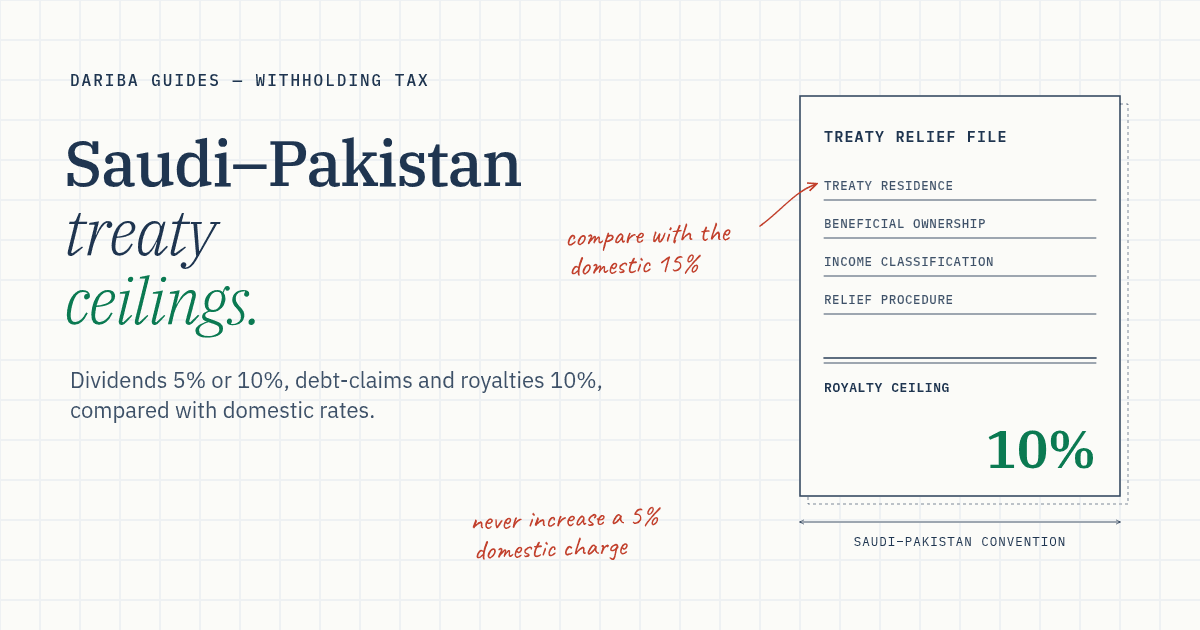
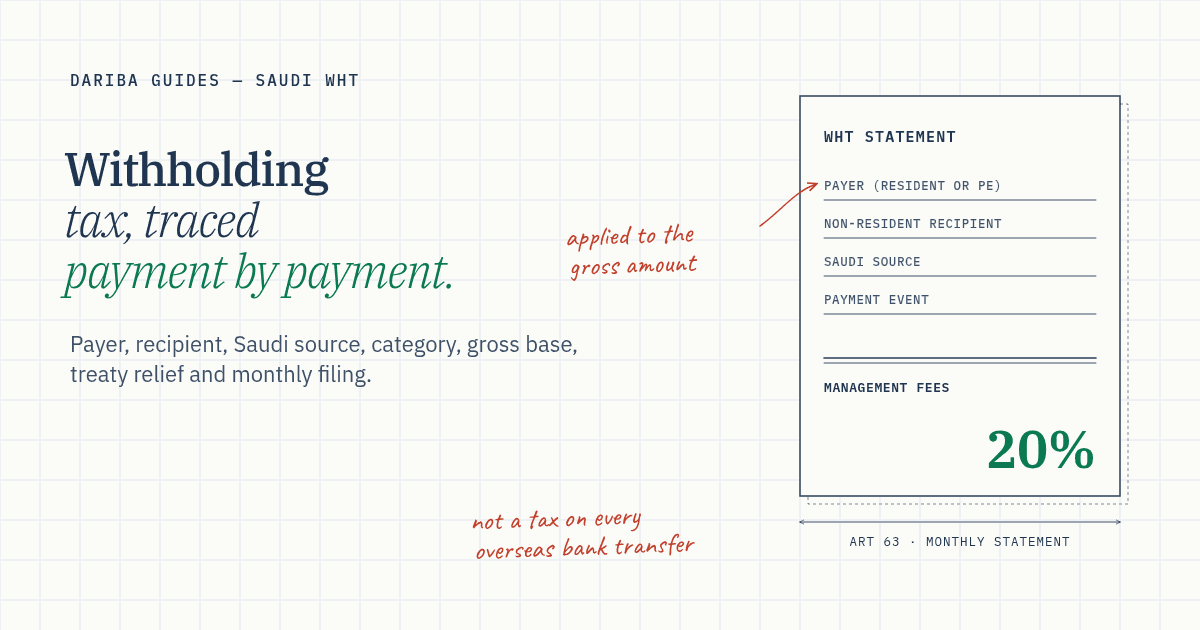
Specific dividend, debt-claim and royalty articles also have their own effective-connection exceptions. Use the Saudi–Pakistan withholding guide to connect the presence analysis with the actual payment and beneficial owner.
Preserve the Facts and the Applicable Benefit Analysis
Dariba recommends keeping the project structure and timeline, connected-enterprise roles, premises and personnel records, agent negotiations, stock/delivery functions and a reasoned preparatory/auxiliary analysis. Record the precise treaty/MLI provision and applicable period for each conclusion.
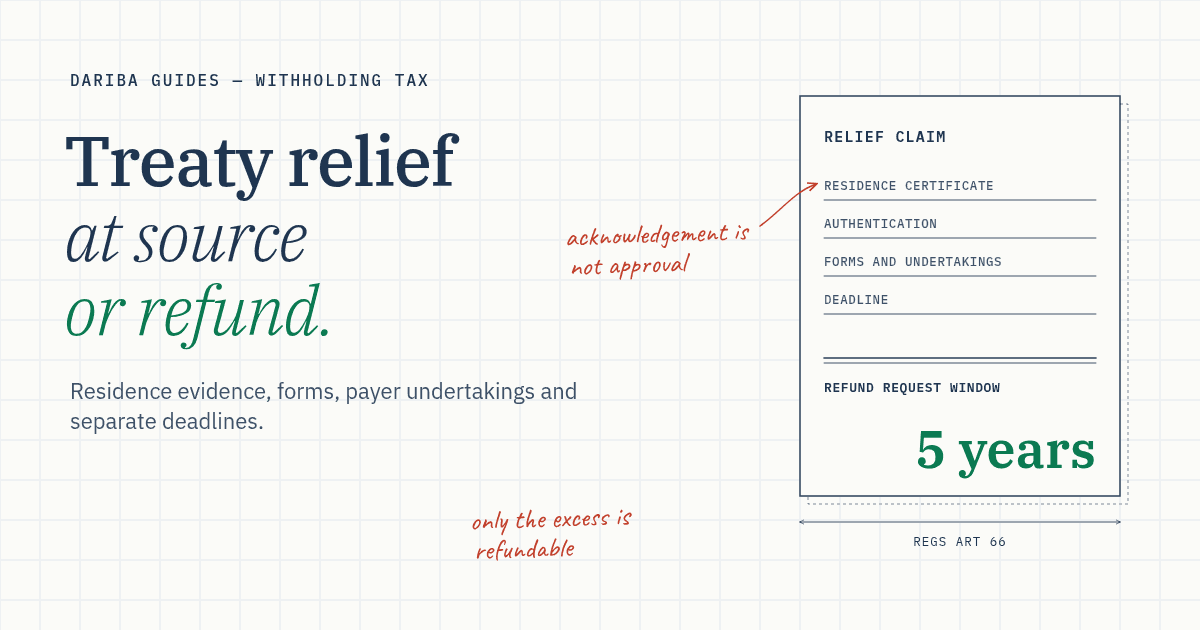
The principal-purposes test remains a separate benefit condition. A conclusion under one PE limb does not establish residence, beneficial ownership, another income article’s treatment or the relief procedure. The treaty-relief guide explains the general procedural framework; case-specific uncertainty should remain visible rather than replaced with a generic six-month assurance.
Key takeaways
- Fixed-place, construction, services and agency are separate PE routes.
- The service test uses more than six months for the same or a connected project within any twelve-month period.
- MLI contract splitting requires the actual connected-project, relationship and period conditions.
- OptionA and anti-fragmentation modify the activity-exemption analysis.
- The agency rule includes the principal role in qualifying contracts; the retained stock/delivery limb also matters.
- Close relationship includes factual control and the stated more-than50% limb; there is no generic lower-percentage safe harbour.
Sources
- Pakistan tax authority: authentic Saudi–Pakistan agreement textArticles 4–5,7 and 10–12, language and final provisions; merchandise-export and insurance clauses retained.
- Pakistan tax authority: jointly prepared MLI synthesisReading aid for matched changes and effect dates. Authentic convention/Protocol and MLI prevail; visible original checked separately from extraction artefacts.
- OECD depositary: Pakistan deposited MLI positionCovered-agreement and selected MLI reservations/notifications matched with Saudi position. Agency, OptionA and contract-splitting choices matched.
- OECD depositary: Saudi Arabia’s deposited MLI positionMatched covered-agreement, reservations and notifications; unilateral choice alone does not modify a treaty.
- OECD: Multilateral Instrument, authentic English textApplicable benefit, PE and entry-into-effect provisions, subject to the parties’ reservations and notifications.
- OECD: current MLI signatories and partiesCurrent depositary listing and links to deposited positions; entry into force and entry into effect are distinct.
- ZATCA Tax Circular: Withholding Tax Implementation under Double Taxation AgreementsSection 3.2 distinguishes business profits, debt-claims, royalties, technical and personal services; actual treaty conditions and procedure govern.
- Saudi Income Tax Law, current Arabic publicationArticles 5 and 68: domestic source and withholding framework; treaty allocations require separate analysis.
- Saudi Income Tax Implementing Regulations, current Arabic publicationArticles 5 and 63: actual source/category, ordinary domestic rates and payment compliance conditions.
General information based on official treaty, MLI and Saudi sources reviewed on 29 October 2026. Authentic instruments, actual facts, payment or tax period, residence, beneficial ownership where required, presence and benefit conditions determine the result. Joint syntheses are reading aids. Dariba illustrations are original; no treaty entitlement, project status or procedural outcome is guaranteed.