In brief
Apply the Saudi–UAE treaty’s project and services thresholds, agency rules and partial force of attraction.
A UAE enterprise that supplies equipment and sends a team to install or maintain it in Saudi Arabia should record which entity does the work, the nature of the work and when it takes place. Article 5 of the Saudi–UAE Double Taxation Agreement uses different time tests for projects and services.
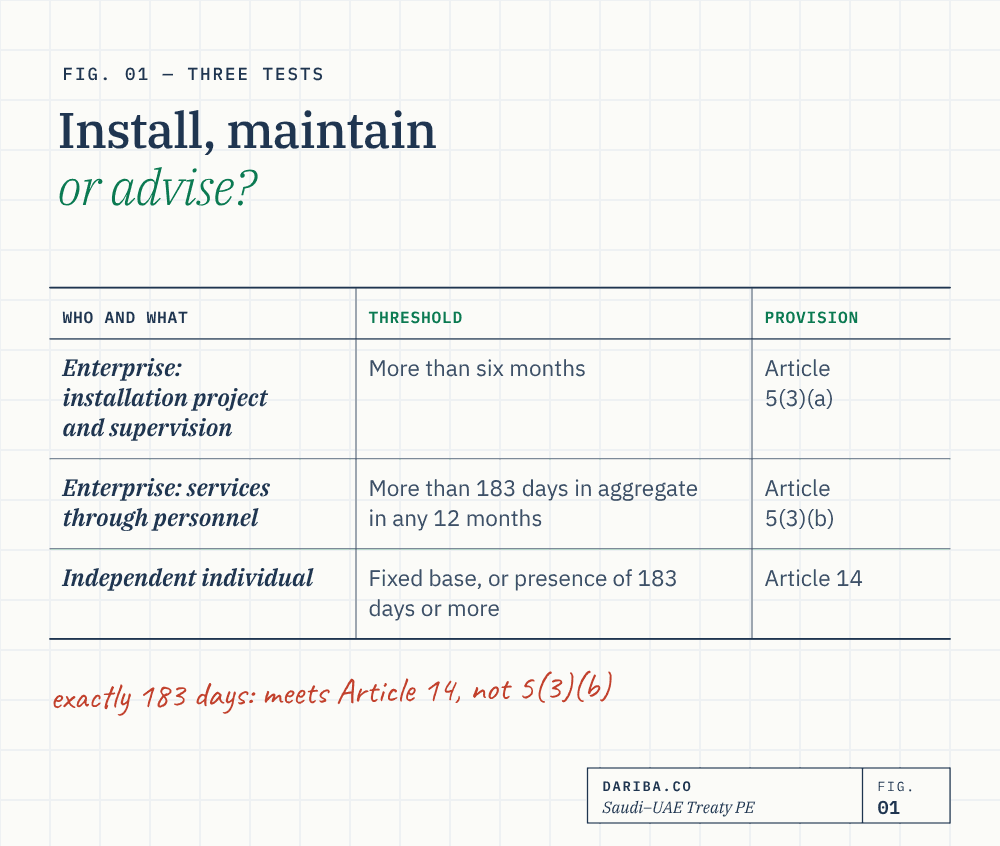
| Activity | Treaty provision | Duration test |
|---|---|---|
| Specified building, construction, assembly, installation and associated supervision | Article 5(3)(a) | More than six months |
| Services through personnel, including consultancy, for the same or a connected project | Article 5(3)(b) | More than 183 days in aggregate in any 12 months beginning or ending in the fiscal year concerned |
Article 14’s test for an independent individual is separate. It includes a fixed-base route and a presence threshold of 183 days or more in the specified period.
Review premises and representatives
Article 5(5) can disapply an activity exemption where the same or a closely related enterprise performs complementary functions in a cohesive business operation and the other conditions apply. Article 5(6) includes a principal-role test for specified contracts routinely concluded without material changes and a route for regular deliveries from stock maintained locally. Review the work actually done by the local representative and the treaty’s independent-agent provision.
Attribute profit and test the export exception
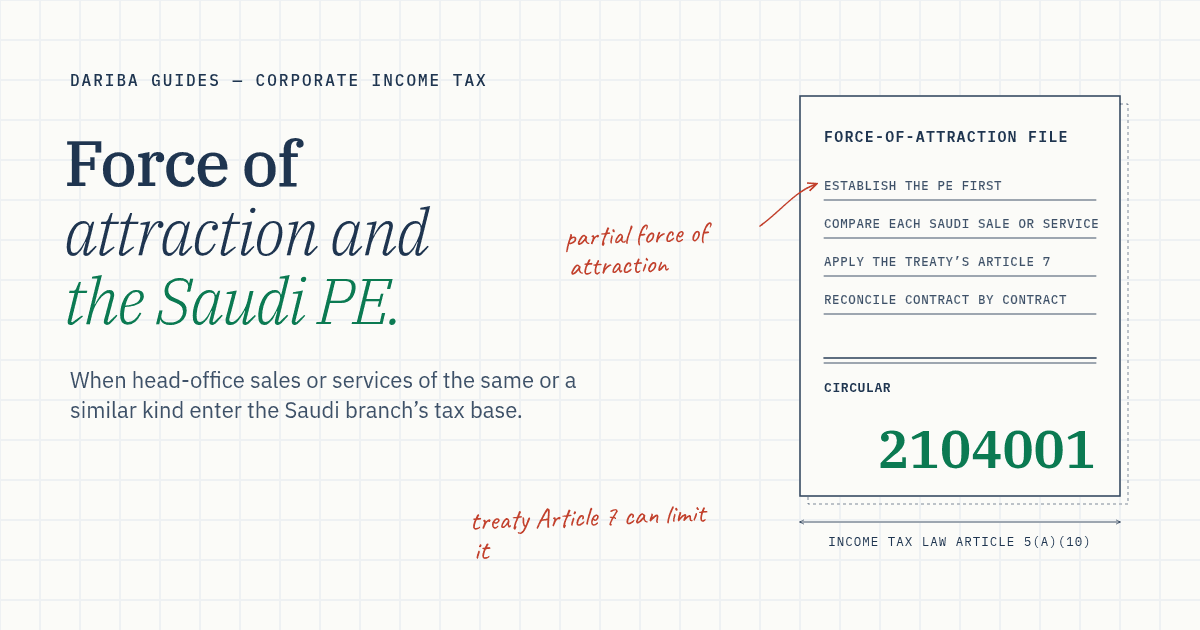
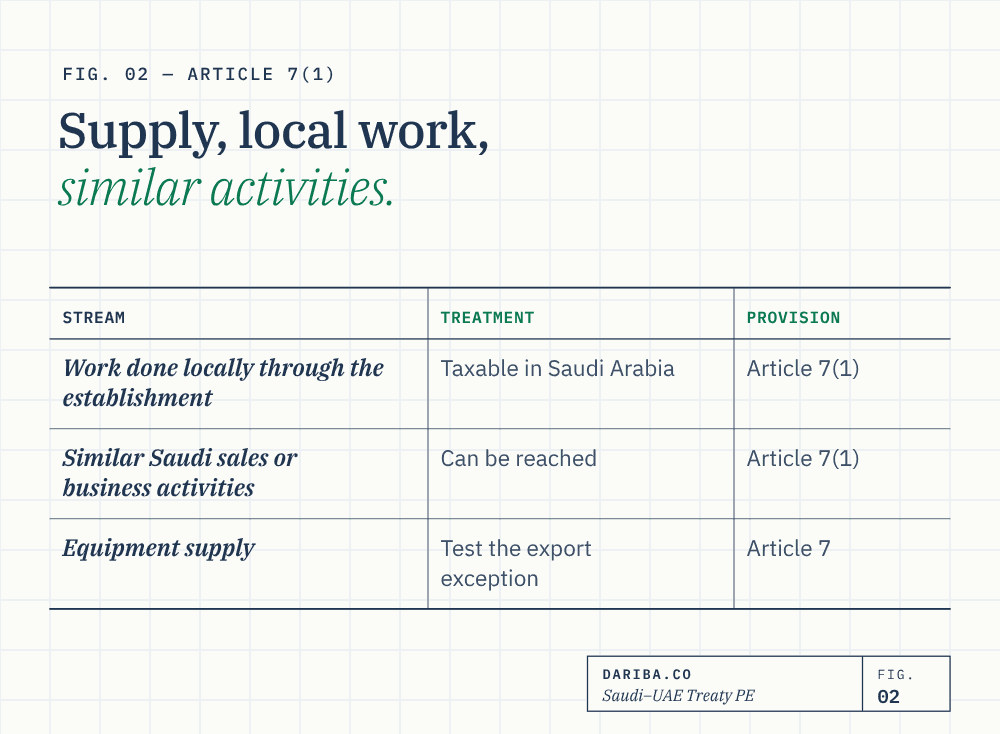
Article 7(1) reaches profit attributable to the Saudi establishment and specified profits from similar Saudi sales or business activities. ZATCA’s Circular 2104001, Force of Attraction Rule in the Context of Permanent Establishment, illustrates the rule with an enterprise that provides comparable maintenance services on additional equipment in Saudi Arabia remotely. Review Article 7(4) separately where the contract includes merchandise exports. Covered export profits are protected from taxation in the importing state, and other work through the local establishment can generate taxable profit there.
Use the contracts and cost records to reconcile the equipment supply, work done locally through the establishment and other similar activities. Article 7(3) addresses expenses and specified internal charges. Article 29(4) preserves domestic taxation of insurance income. For separately classified payments, use the Saudi–UAE withholding guide.
Key takeaways
- Article 5(3)(a) counts more than six months for specified projects.
- Article 5(3)(b) counts more than 183 days for services on the same or a connected project.
- Article 7(4) distinguishes merchandise exports from local work performed through the establishment.
Sources
- ZATCA Circular 2104001, Force of Attraction Rule in the Context of Permanent EstablishmentDomestic and treaty treatment, including the UAE maintenance example.
- Saudi–UAE Agreement for the Avoidance of Double Taxation with Respect to Taxes on Income and on Capital and the Prevention of Tax EvasionArticles 5, 7, 14 and 29.
- ZATCA Treaty Register, United Arab Emirates ConventionSignature and entry into force.